
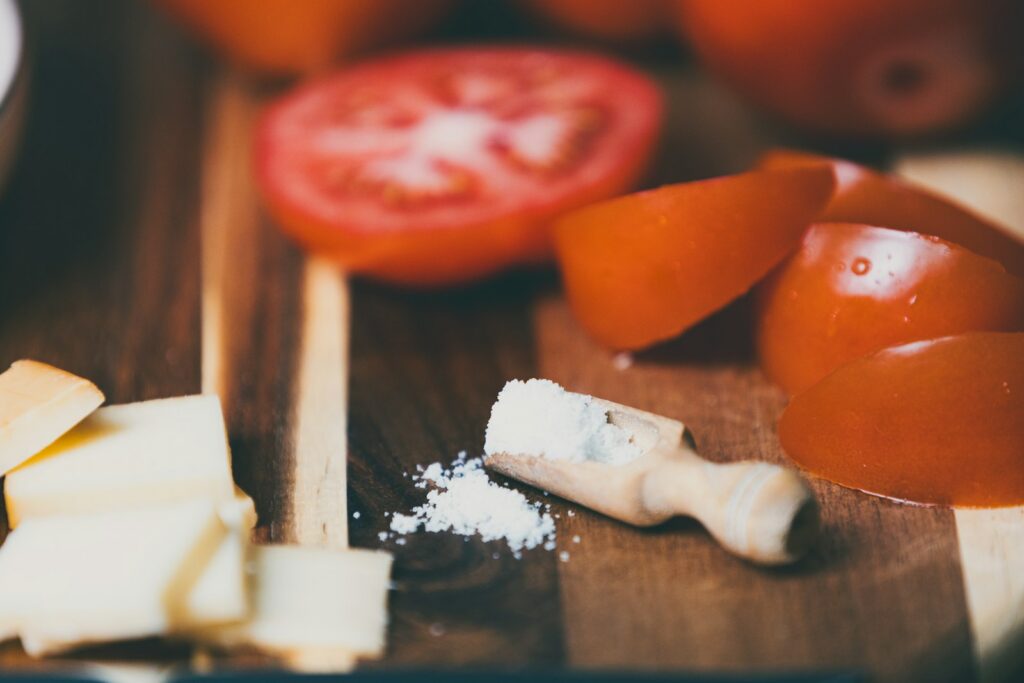
The first time I understood finishing salt, I was standing over a plate of sliced tomatoes in July, and my friend Helen was the one who noticed. She took a bite, set down her fork, and asked what I had put on them. “Nothing,” I said. “Only salt, at the very end.” I had scattered a few flakes of sea salt across the slices a second before I carried them to the table, and that late pinch was the whole difference.
Discover our handpicked collection of gourmet salts, spices & peppers
Shop Salt'sUp Collection →For most of my life, salt meant the fine white powder in the shaker, the kind that dissolves into the pot and vanishes. Finishing salt works the other way around. It is the salt you can see on the food, feel between your teeth, and taste as a clear, bright point rather than a background hum. Once you have cooked with it for a week, the shaker starts to look like a missed opportunity.
If you have ever eaten the same dish at a good restaurant and at home and wondered why the restaurant version felt more alive, finishing salt is often the quiet reason.
What finishing salt actually is
Finishing salt is any salt you add to food at the very end, just before or just after it reaches the plate, for texture and a last clean hit of flavour rather than to season a dish while it cooks.
The word describes a job, not one product. What qualifies a salt for that job is its shape. A good finishing salt has large, crisp flakes or delicate, moist crystals that hold together on the surface of the food instead of melting into it. You taste each crystal on its own, and you hear a faint crunch as it goes.
That is the entire distinction. A cooking salt should disappear evenly through a dish. A finishing salt should stay where you put it and announce itself.
Which is why the single most useful habit in a kitchen is to keep two salts within reach: a plain, fine one for the cooking, and a good finishing salt for the last second. They do opposite jobs, and a fine salt can never give you the crunch, just as a finishing salt is wasted the moment it hits the pasta water.
The salts worth finishing with
Finishing salt is a family rather than a single jar, and each member behaves differently on the plate.
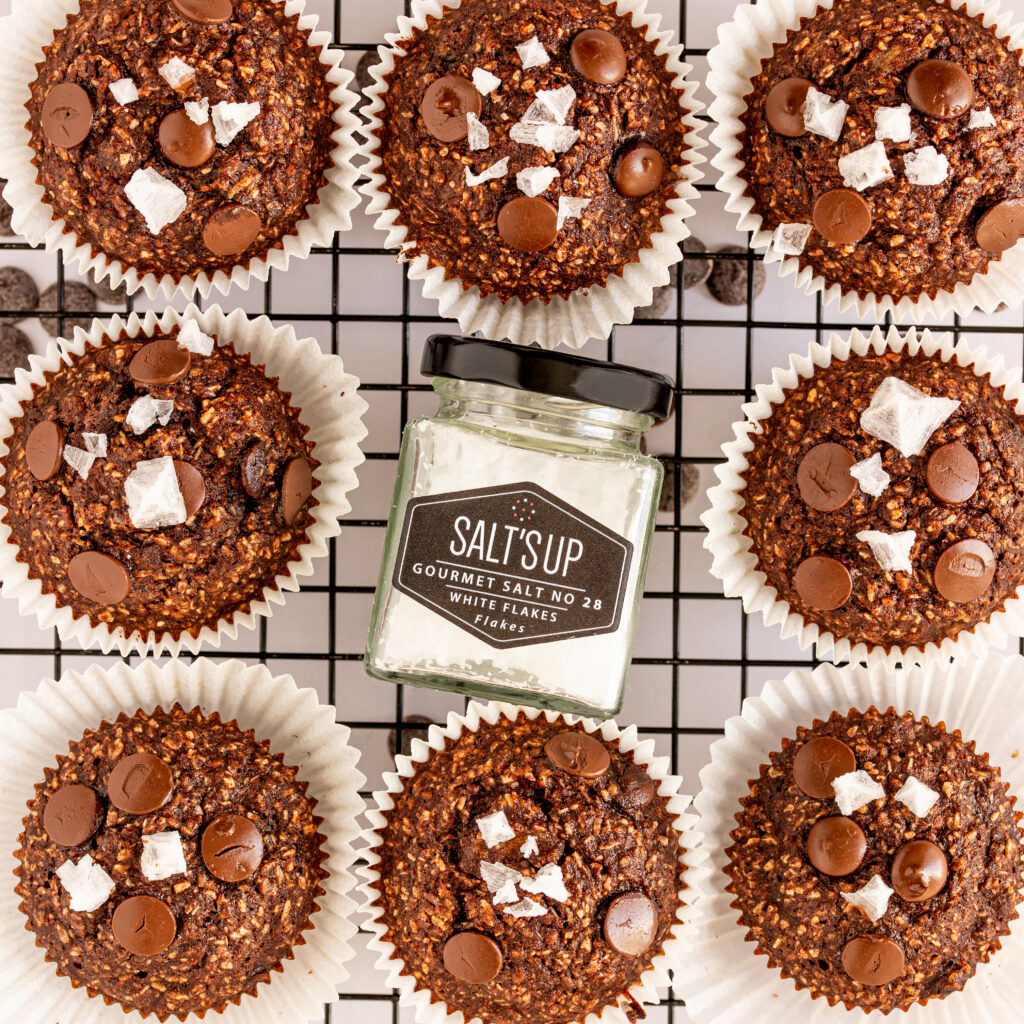
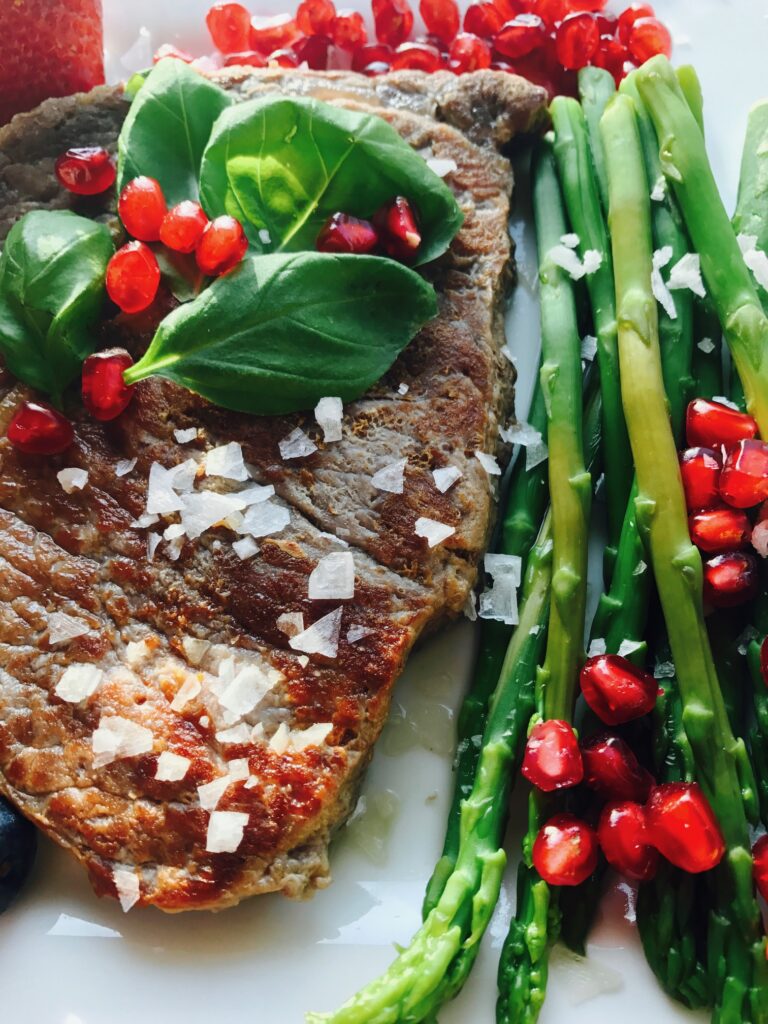
Flaky sea salt is where most people start. Thin, pyramid-shaped flakes that break between your fingers and melt fast on the tongue, giving crunch without turning a dish harsh. It suits almost everything: a rested steak, roasted vegetables, a green salad, warm cookies, a tray of caramels. If you only ever own one finishing salt, make it this. (Our flake and finishing salts.)
Fleur de sel, the flower of salt, is hand-raked from the thin crust that forms on the surface of salt ponds on still days. The crystals are fragile and a little damp, the flavour softer and more mineral than flakes, almost sweet. This is the salt for the moments when you want elegance instead of crunch: raw fish, ripe tomatoes, a square of dark chocolate.
Sel gris, grey salt, comes from lower in the same ponds and keeps the minerals of the clay beds, which give it its colour and a firmer, brinier bite. It belongs on grilled meat and robust winter vegetables, dishes that can stand up to it.
Smoked salt is sea salt cold-smoked over wood until it carries real smoke, not a flavouring. A pinch puts a campfire note on food that never saw a grill: fried eggs, baked potatoes, popcorn, a bowl of soup. (More in our guide to smoked salt.)
Flavoured and infused salts, blended with truffle, herbs, citrus, chilli or vanilla, are finishing salts by nature, because their aromatics read best raw and on the surface. Truffle salt on soft eggs, lemon salt on white fish, vanilla salt on chocolate.
Himalayan pink flakes bring a gentle mineral taste and a rose colour that sits beautifully on a pale plate. (See our Himalayan pink salt guide for the coarse, fine and flake forms.) At the specialty end of the family you reach salts that are as much garnish as seasoning, from black volcanic salt to the glossy spheres we wrote about in African salt pearls.
How to use finishing salt without overdoing it
Finishing salt is easy to love and easy to spoil a plate with. A few habits keep it honest.
Add it last, after the food is off the heat and already on the plate. Heat and steam melt the crystals, and once they melt you have lost the texture that made the salt worth using.
Use less than feels right. Because you taste finishing salt directly, a small amount lands as a highlight and a heavy hand turns the whole dish salty. Start low, taste, and add again if you need to.
Scatter from a height. Hold a pinch between thumb and finger and let it fall from twenty or thirty centimetres above the plate. You get even coverage and a cleaner look than a crystal pile dropped in one spot.
Give the salt something to play against. It shines on contrast: the fat of a steak, the sweetness of chocolate or caramel, the acid of a tomato, the richness of an egg yolk, the cold of sliced summer melon.
And keep it off the stove. Finishing salt will not dissolve evenly in a pot or a dough, and it is far too good, and too expensive, for salting water. That is what your plain cooking salt is for.
One thing that catches people out
Finishing salts have big, airy crystals, so a spoon of flakes holds much less actual salt than a spoon of fine table salt. This means you should never swap a finishing salt one for one for the table salt a recipe calls for, or the dish comes out under-seasoned. Season the cooking with fine salt by the recipe, and keep the finishing salt for the final scatter, by taste and by eye.
What I tell people across the counter
In our salt shop in the old town of Tallinn, the question I hear most is some version of “which one is the best.” The honest answer is that the best finishing salt is the one that makes you reach for it. People come in nervous about getting it wrong, and leave having learned that there is very little to get wrong: a good flake salt and a steady hand cover almost everything, and the rest is curiosity.
Someone will buy a small box of smoked salt for their eggs, come back a month later, and leave with four more salts for things they had not thought to try. That is usually how it goes. The first good pinch is the one that opens the door.
Helen still brings up those July tomatoes. Nothing on the plate had changed except a few flakes added at the last second, and yet everything had. Finishing salt asks almost nothing of you: no new skill, no new pan, only the right salt and the right moment. Start with one box of flakes on the counter, and let your cooking tell you what it wants next.
Browse our flake and finishing salts to find where to begin.
Frequently asked questions
What is finishing salt used for?
What is the difference between finishing salt and regular salt?
Is flaky sea salt the same as finishing salt?
Can I cook or bake with finishing salt?
How much finishing salt should I use?
Ready to elevate your cooking?
Visit our salt shop in Tallinn or browse our online store
Visit saltsup.com →