On a flat grey afternoon on the French Atlantic coast, I watched a man walk the edge of a salt pond with a long wooden rake, skimming something off the surface of the water so gently it looked like he was afraid to wake it. What he was lifting was fleur de sel, the thin, pale crust that forms on still, warm days, and he gathered it the way you would gather a spider’s web.
Discover our handpicked collection of gourmet salts, spices & peppers
Shop Salt'sUp Collection →Fleur de sel, the flower of salt, is the most delicate salt in the world and the one with the longest story. It is sea salt, but only the first, finest layer of it: the fragile crystals that form on the very surface of a salt pond when the sun and wind are right, raked off by hand before they sink. Everything about it, the way it is made, the way it tastes, the way you use it, follows from that single fact. It floats, so it is gathered gently, and it is treated gently ever after.
If you have ever seen fleur de sel on a shop shelf and wondered why a small jar costs what it does, the answer is in that slow walk along the pond.
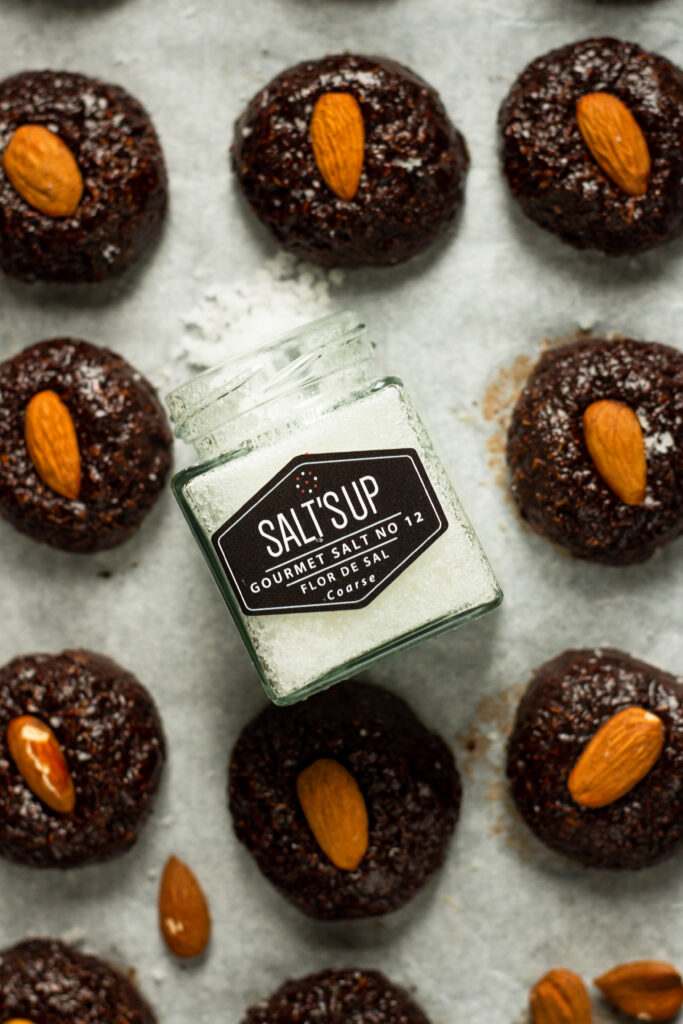
What fleur de sel actually is
A salt pond works in stages. Seawater is led through a series of shallow basins, and as it moves and evaporates it grows saltier, until in the final pans the salt begins to crystallise. Most of that salt sinks to the bottom and is raked up as the coarse, grey, mineral-rich salt the French call sel gris. But on calm, warm days, a second thing happens first: a thin, bright crust forms on the very top of the water, held up by surface tension. That crust is fleur de sel.
Because it forms on the surface, away from the clay floor of the pond, fleur de sel is paler, cleaner and more delicate than the salt below it. The crystals are small, flaky and a little damp, and they carry a soft, almost sweet minerality rather than a hard, sharp salinity. The best known comes from the French Atlantic, from places such as Guérande and the Île de Ré, though fleur de sel is made anywhere the climate allows, from Portugal to the Mediterranean.
One pond yields only a little of it, and only on the right days, and only by hand. That is the whole reason it is precious.
Fleur de sel vs sel gris: the same pond, two salts
People often ask about fleur de sel and sel gris as if they were rivals. They are better understood as siblings from the same water.
Fleur de sel is the delicate surface crust: pale, fine, moist, subtle, expensive, and used as a finishing salt. It is what you sprinkle over a dish at the last moment.
Sel gris, grey salt, is the coarse salt raked from the bottom of the same pond. It takes its grey colour and its firmer, brinier, more mineral character from the clay floor it forms against. It is less expensive, holds moisture, and suits cooking as well as finishing: a robust salt for grilled meat, hearty vegetables, and bread.
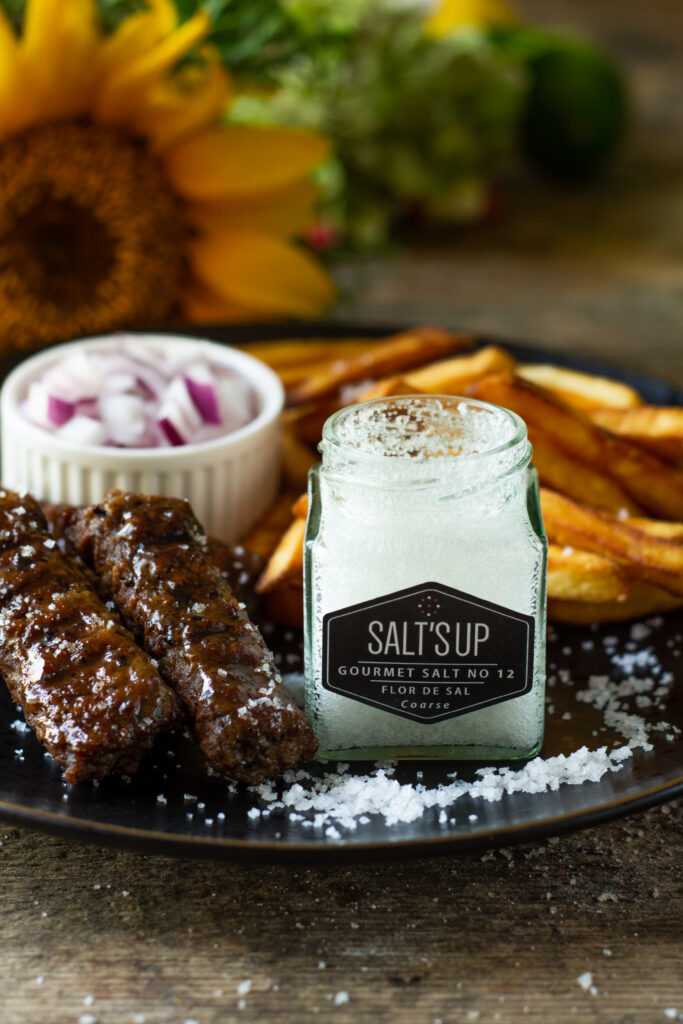
So the simple way to hold them apart: fleur de sel is the gentle finish, sel gris is the mineral workhorse. Many cooks keep both, one for the pot and one for the plate.
How fleur de sel tastes, and why
The thing that surprises people the first time is that fleur de sel does not taste aggressively salty. Because the crystals are thin and moist, they dissolve slowly and spread the salinity out, so you get a gentle wave rather than a sharp hit, with a faint sweetness and a clean mineral edge underneath. There is no bitterness, none of the flat, chemical note of fine table salt.
This is why fleur de sel belongs at the end of cooking, never in the pot. Stir it into a sauce and you waste it, because heat and liquid erase everything that makes it worth having. Scatter it over the finished plate and it stays itself: a little texture, a soft bloom of salt, a reminder that salt can be a pleasure rather than a background.
How to use fleur de sel
Treat fleur de sel as a finishing salt, which is what it is. A few habits get the most from it.
Add it at the very last moment, after the food is plated and no longer steaming, so the crystals keep their shape. Use a small pinch between your fingers and scatter from a little height for even coverage. And give it something to sit against: fat, sweetness or acidity, where its gentle salinity reads clearly.
Fleur de sel is at its best on simple, good things. A ripe tomato with olive oil. A piece of grilled fish. A soft-boiled egg. Buttered radishes, the classic French way. Dark chocolate, caramel, a slice of salted butter on good bread. Anywhere you want the salt to be felt as a grace note rather than a seasoning, this is the one to reach for. For a fuller map of when to finish with which salt, see our guide to finishing salt.
Keep it somewhere dry, loosely covered. A little moisture is natural to fleur de sel and part of its character, but it does not like to be left open in a damp kitchen.
A note from a salt marsh
The paludiers, the salt farmers who still work the French ponds by hand, talk about fleur de sel as something the pond gives or withholds depending on its mood. On a windy day there is none. On the right still afternoon the surface blooms, and it has to be lifted that same day, before evening cools the water and the crystals drop. One of them, resting his rake at the edge of a pond, told me that his grandfather had worked the same basins, and that the method had not changed because nothing had been found that works better than a person, a wooden rake, and a patient eye.
That is the quiet luxury of fleur de sel. Not that it is rare for the sake of being rare, but that it is still made the slow way, by hand, one still afternoon at a time.
Planning: choosing and using fleur de sel
What to look for: pale, slightly moist, flaky crystals with a clean smell and no bitterness. Guérande and Île de Ré are the classic French sources. See our fleur de sel.
How to store it: somewhere dry and loosely covered. Expect it to stay a little damp; that is normal.
Best first uses: a ripe tomato, a grilled fish fillet, buttered bread, or a square of dark chocolate, where its soft salinity shows clearly.
If you also want a cooking salt: keep a jar of sel gris alongside it, the coarse grey salt from the same ponds, for the pot and the grill.
I still think about that man and his rake whenever I open a jar of fleur de sel. There is nothing clever in it, no machine, no shortcut, only the top of the sea lifted off on a good day and carried home. Use it the same way it is made, gently and at the last moment, and a pinch will do more for a plate than a spoon of anything else.
Find ours in fleur de sel.
Frequently asked questions
What is fleur de sel?
What is the difference between fleur de sel and sel gris?
How do you use fleur de sel?
Why is fleur de sel expensive?
Is fleur de sel healthier than table salt?
Ready to elevate your cooking?
Visit our salt shop in Tallinn or browse our online store
Visit saltsup.com →