
A cook I know keeps one pepper mill on the counter and thinks the matter is settled. For most of my life, so did I. Then someone put a single crushed Kampot peppercorn on my tongue, still warm from the grinder, and I tasted citrus, then eucalyptus, then a slow heat that arrived like a second thought, and I understood that I had been seasoning food with the dullest member of a very large and very interesting family.
Discover our handpicked collection of gourmet salts, spices & peppers
Shop Salt'sUp Collection →Black pepper is the most traded spice in the world, and almost all of it is the same commodity ground to dust and left in a tin until it is tired. But pepper, properly understood, is a whole world: red and white and green peppercorns from the same vine, false peppers that are really berries, long peppers that predate black pepper in the kitchen, and spices from other plants entirely that earned the name for their heat. This is a guide to the best of them, and to why a good pepper deserves the same attention as a good salt.
First, what pepper actually is
True pepper comes from the vine Piper nigrum, and the colours on the shelf are not different plants but the same berry picked and treated at different stages.
Black pepper is the unripe berry, cooked briefly and dried until the skin wrinkles and blackens. It is the sharp, familiar one. White pepper is the ripe berry with the dark skin removed, leaving the pale inner seed. It is cleaner, earthier, and a little funky, prized in pale sauces and in much of Asian cooking where the black specks are unwanted. (We write more on white peppercorn uses.) Green pepper is the unripe berry preserved before it can darken, soft and fresh and herbal. Red pepper, true red, is the fully ripe berry, sweet and fragrant and rare.
So the first upgrade is not a new spice at all. It is buying whole peppercorns of a known origin and grinding them fresh, because the aromatics that make pepper interesting start fading the moment it is cracked.
Kampot: the pepper worth the trip
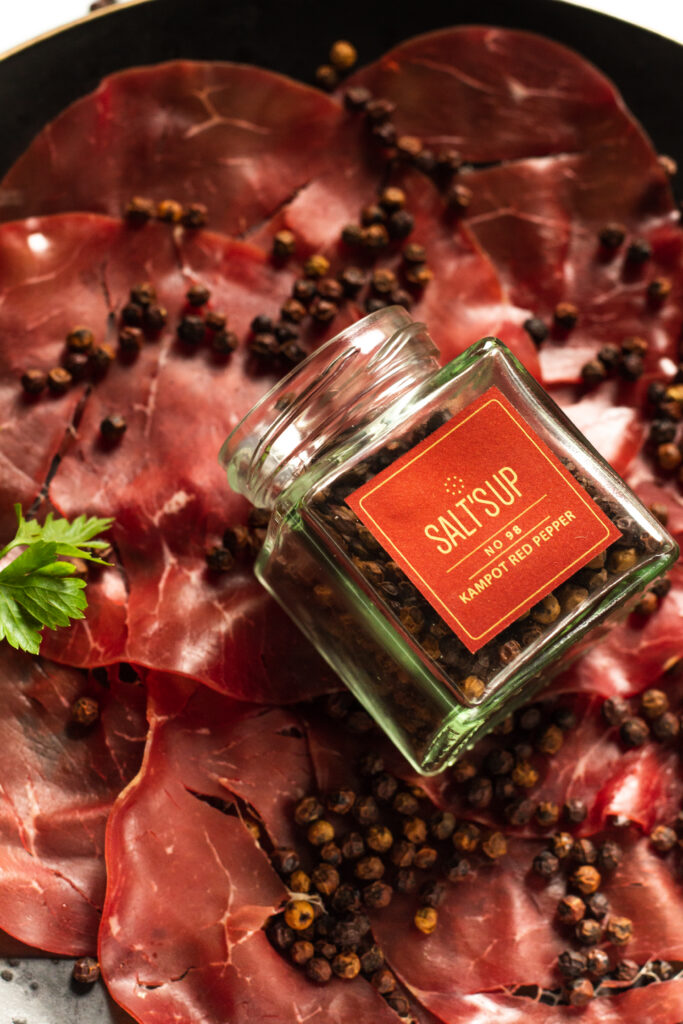
If there is one pepper that converts people, it is Kampot, grown in a small region of Cambodia and protected by name the way Champagne is. The vines grow in a particular red soil under a particular sun, and the result is a pepper with real perfume: citrus and flowers on top, eucalyptus underneath, and a heat that builds slowly and cleanly rather than hitting all at once.
Kampot comes in the same colour range as any pepper. Black Kampot is the everyday hero. Red Kampot, the ripe berry, is sweeter and more aromatic. White Kampot is clean and intense. A dish finished with freshly cracked Kampot tastes seasoned in a way pre-ground pepper simply cannot manage. We give it its own full write-up in Kampot pepper.
The false peppers worth knowing
Some of the most interesting “peppers” are not Piper nigrum at all. They borrowed the name because they bite, and each brings something black pepper cannot.
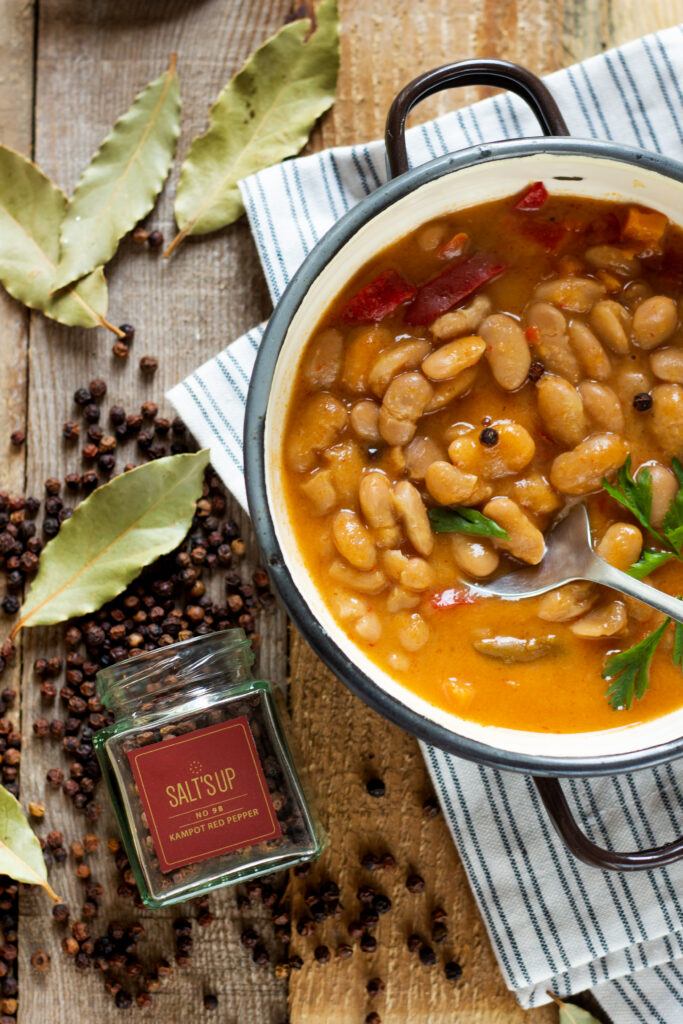
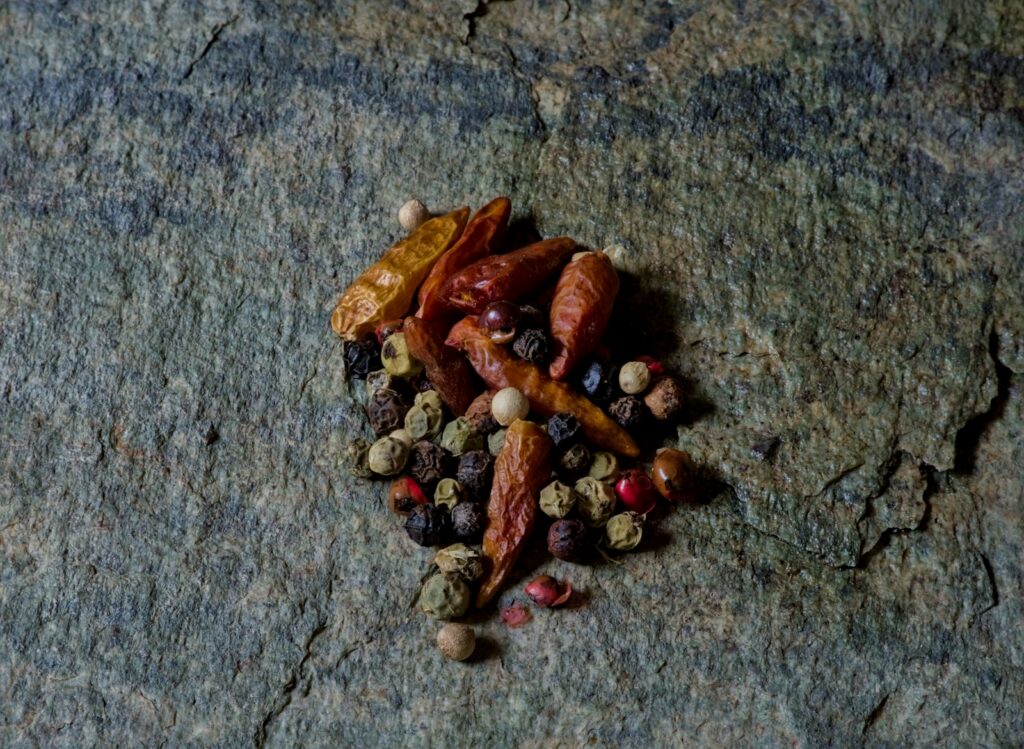
Pink pepper is the dried berry of a Brazilian tree, not a true pepper. It is fragrant, sweet, resinous and only mildly hot, beautiful whole for its rose colour and lovely with fish, poultry and even in desserts. Cubeb pepper, the tailed pepper, is an old spice from Indonesia with a flavour between pepper and allspice, with a pine and bitter edge. It flavoured kitchens in medieval Europe long before it faded, and it is worth rediscovering. See our guide to cubeb pepper. Long pepper is pepper’s older cousin, a small catkin rather than a round berry, hotter and sweeter than black pepper, with a flavour that hangs around. It was the pepper of the ancient world before the round berry took over. Tasmanian pepper is the berry of a shrub from the other side of the world, intensely fruity and surprisingly fierce, with a heat that creeps up after a pause. More in Tasmanian pepper. Grains of paradise, also called melegueta pepper, are the seeds of a West African relative of ginger, peppery and warm with notes of cardamom and citrus. We cover them in grains of paradise.
How to use the good peppers
The rules are simple and they matter.
Buy whole and grind fresh. This is the single biggest difference between interesting pepper and dull pepper. Whole peppercorns keep their aromatics for a long time; ground pepper loses them in weeks.
Match the pepper to the dish. Keep a good black Kampot as your everyday grinder pepper. Reach for white pepper in pale sauces and Asian dishes. Use pink pepper and grains of paradise where you want fragrance more than fire, on fish, poultry and fruit. Save cubeb and long pepper for when you want to make a familiar dish taste unfamiliar in a good way.
Add most pepper late. Long cooking dulls pepper’s aromatics and can turn it harsh, so for the brightest flavour, grind it over a dish near the end or at the table, the way you would finish with a good salt.
Keep a pepper worth finishing with. The same logic that makes a finishing salt worthwhile applies to pepper. A grind of fresh Kampot over a finished plate is a finishing spice, and it belongs next to your finishing salt.
A good mill earns its place here. Pepper is only as fresh as your last grind, and a mill that crushes cleanly, with an adjustable grind, makes all of this easier. We go into mills in salt and pepper mills.
Planning: building a pepper shelf
Your everyday pepper: whole black Kampot, ground fresh. One upgrade that changes daily cooking.
Your pale-dish pepper: white peppercorns, for cream sauces, mashed potato and Asian cooking.
Your fragrance peppers: pink pepper and grains of paradise, for fish, poultry, fruit and anywhere you want aroma over heat.
Your curiosities: cubeb and long pepper, to make a known dish taste new.
The tool: a good adjustable mill, because every one of these is only as good as the moment you grind it. See pepper mills.
That first warm crack of Kampot is still the clearest line between before and after in my own cooking. One peppercorn did what a hundred dinners of tired black dust never had, which was to make me curious. Keep a good pepper by the stove, grind it fresh, and treat it with the same care you give a good salt. The shaker was never the whole story.
Explore our whole peppercorns and pepper sets.
Frequently asked questions
What is the best pepper in the world?
What is the difference between black, white, green and red peppercorns?
Is pink pepper real pepper?
What are grains of paradise?
Should I grind pepper fresh?
Ready to elevate your cooking?
Visit our salt shop in Tallinn or browse our online store
Visit saltsup.com →