
The first salt block I ever used, I nearly ruined in four minutes. I set it on a high flame the way you would a frying pan, heard a sound like a knuckle cracking, and watched a thin line open across one corner. A salt block is a slab of the mountain, and the mountain does not like to be rushed.
Discover our handpicked collection of gourmet salts, spices & peppers
Shop Salt'sUp Collection →A Himalayan salt block is a solid piece of pink rock salt, cut from the same ancient deposits in Pakistan that give us pink Himalayan salt, and shaped into a flat plate you can cook on, chill on, cure on, and serve from. Used well, it does something no pan can: it seasons the food from below as it cooks, with a clean, mineral salinity that rises up through a scallop or a slice of steak rather than sitting on top. Used badly, it cracks, and you learn the single most important rule the hard way, as I did.
This is the guide I wish I had read before that first flame. How to heat a salt block without breaking it, what to cook on it, how to clean it, and how to make one last for years.
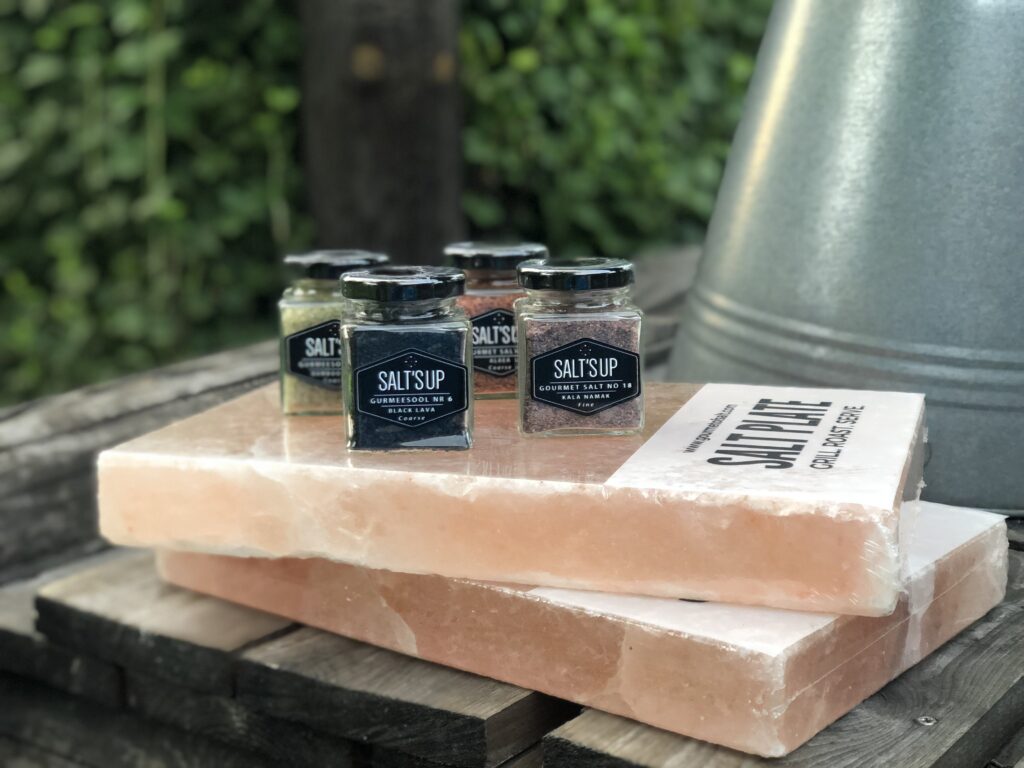
What a salt block actually does
Cook a prawn on a hot salt block and two things happen at once. The stone holds a steady, even heat and sears the surface, and a whisper of salt passes into the food where it touches the stone. You are seasoning and cooking in the same motion, from one side, which is why food from a salt block tastes seasoned all the way through rather than salted on the outside.
The same block works cold. Chill it in the freezer and it becomes a serving slab that keeps oysters, sashimi, cheese or fruit cool for an hour, lending each bite the faintest edge of salt. One slab, two opposite jobs, and years of use between them.
People reach for a salt block, or a salt plate, for the drama of cooking at the table, but they keep it for the flavour. Once you have eaten a sea scallop cooked on hot pink salt, a plain pan feels like a step backwards.
The one rule: heat it slowly
Salt blocks crack for a single reason. Salt does not conduct heat the way metal does, so if you heat one spot fast, that spot expands while the cold parts around it stay still, and the stress splits the stone. The fix is patience.
Heat the block in stages, giving it time to warm through evenly:
- Start the block on a low flame, or a low burner, or in a cold oven that you then turn on low. Never drop a cold block onto high heat.
- Hold it low for about fifteen minutes. The surface will darken slightly and dry out.
- Raise the heat one step and wait another ten to fifteen minutes.
- Keep stepping up until the block reaches cooking heat, around thirty to forty minutes in total. It is hot enough when a drop of water skitters and vanishes on contact, or when you cannot hold your hand a few centimetres above it for more than a second or two.
On a gas hob, use a heat diffuser between the flame and the block if you have one. On an electric or induction hob, check that the block sits flat and the element is not larger than the stone. On a grill, treat the lid-down grill as your low oven and bring the block up with it. The method is always the same: slow, even, no shortcuts.
A block that has been heated properly can reach high temperatures and sear beautifully. A block rushed from cold to hot is the one that cracks, every time.
What to cook on a salt block
Once it is hot, a salt block sears like a stone griddle. The food that shines on it is thin, quick-cooking, and good friends with salt.
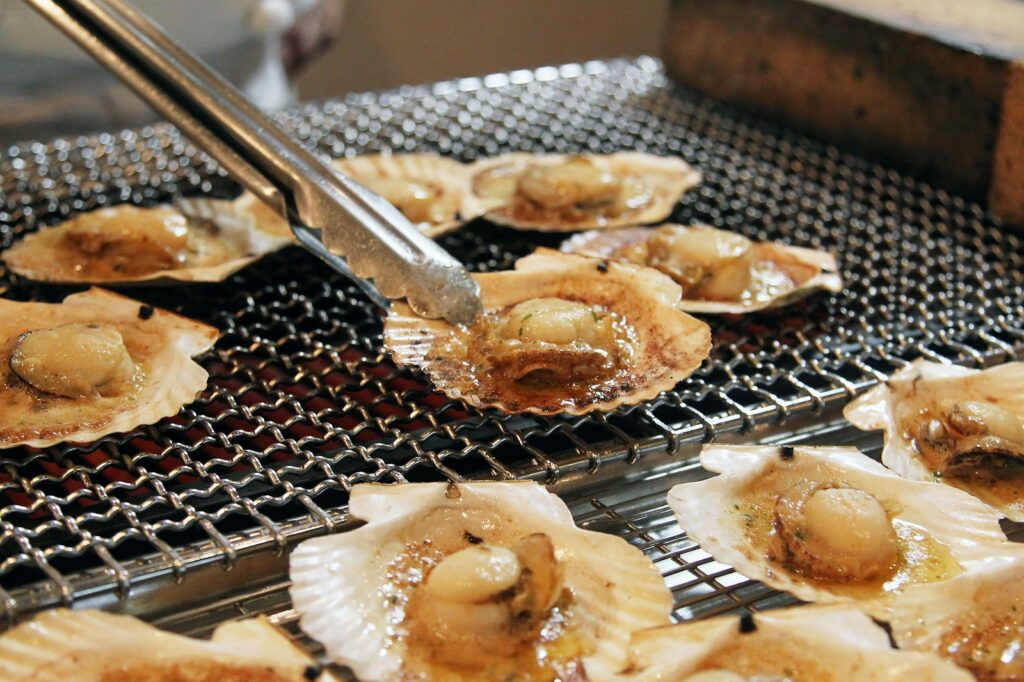
Thin cuts of steak and lamb, cut no thicker than a finger, take on a crust in a minute or two a side. Scallops, prawns and squid cook in moments and pick up just enough salinity. Thin fish fillets, firm vegetables, halloumi, even eggs all work. The trick is to keep pieces thin and the contact brief, so the salt seasons without overpowering.
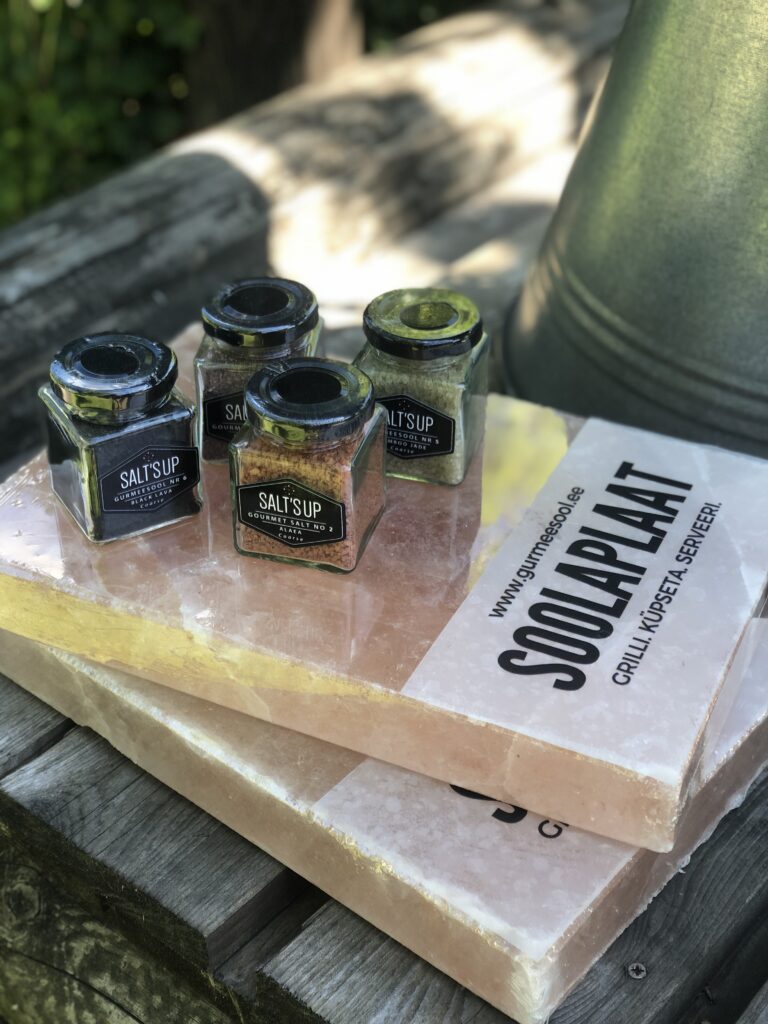
One sensory note, because it is the thing people remember. The first time I cooked scallops on a block for friends in the shop kitchen, the room went quiet when they hit the stone, a low hiss and a smell of warm minerals, and the scallops came off with a thin golden crust and a salinity that seemed to come from inside them rather than from a shaker. Nobody reached for salt at the table. There was no need.
Cold, the same block turns a plate of oysters, cured salmon, or ripe melon into something that looks like it belongs in a restaurant and seasons itself as you eat.
A word on salt: because the block is doing the seasoning, go very light with any added salt while you cook, and taste before you add more. For the final touch, a few flakes of finishing salt on the plate is all most dishes want.
How to clean a salt block
Cleaning is where blocks are saved or lost, and it is simpler than people fear. The block is salt, so it is naturally resistant to bacteria, and it hates standing water.
Let the block cool completely on its own, never by running it under a tap while warm, which is the second most common way to crack one. Once cool, scrape off any residue with a plastic scraper or a damp cloth. For stubborn spots, use a barely damp sponge with no soap, since the stone will not hold onto flavours the way a pan does. Wipe it, do not soak it. Then let it air-dry fully, ideally overnight, before you put it away somewhere dry.
Over time the block will shrink a little, change colour, and pick up a patina. This is normal, and not a fault. A well-kept salt block lasts for years and hundreds of meals.
A Tallinn note
In our salt shop, the salt plate is the thing people are most curious about and most nervous to buy, sure they will break it the first week. Helen, the friend who first noticed what a late pinch of salt can do, was exactly the same, convinced she would crack hers before she cooked a single thing on it. She heated it slowly, the way she had been told, cooked a plate of prawns, and now it comes out most weekends. The block is far tougher than it looks, as long as you give it time to warm up. That is the whole secret, and the rest is pleasure.
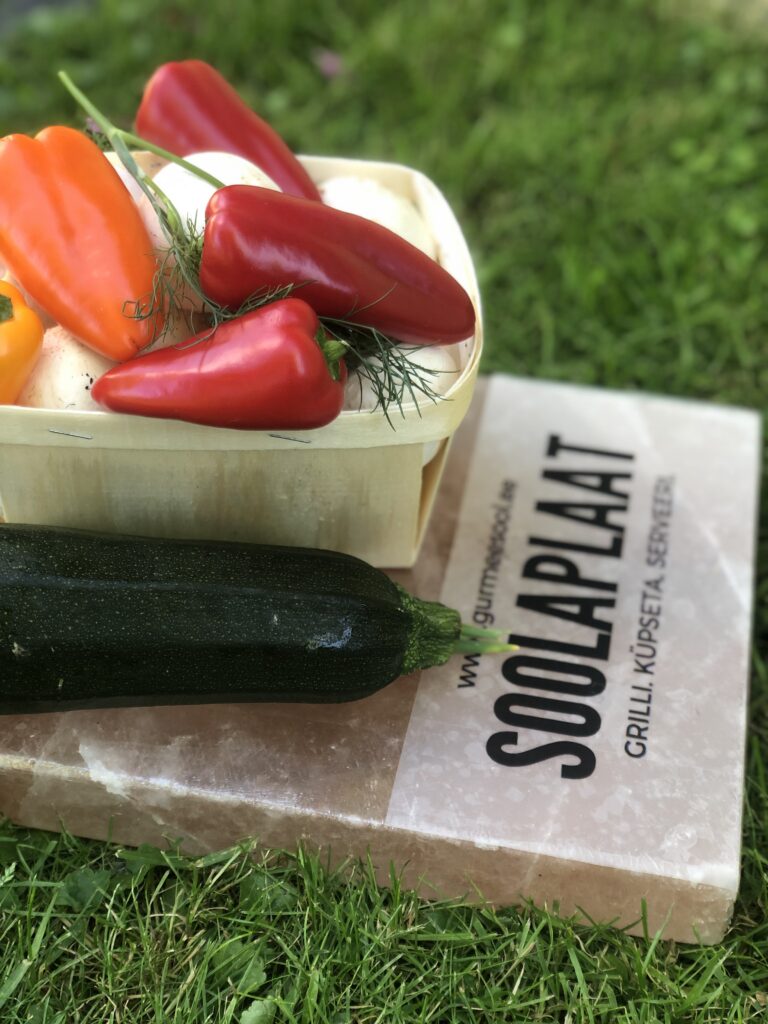
Planning your first salt block cook
Choosing a block: A plate around 20 by 20 centimetres and two to three centimetres thick suits most home cooking. Thicker blocks hold heat longer and resist cracking better. Look at our salt blocks and plates for sizes.
You will also want: a trivet or wooden tray to carry the hot block to the table, a plastic scraper for cleaning, and a heat diffuser if you cook on gas.
Best first dishes: prawns, scallops, or thin steak, where a short, hot contact shows off what the block does without much that can go wrong.
Heating time: set aside thirty to forty minutes to bring the block up to heat. Build it into the evening rather than rushing it.
That first cracked corner is still on a shelf in the shop, and I keep it there on purpose. It cost me one block and taught me the only rule that matters: the mountain gives you everything, a clean sear, a seasoning from below, a slab that turns a Tuesday dinner into an event, and asks for one thing in return, which is that you do not rush it. Heat it slow, and a salt block will cook for you for years.
Find your first block in our salt blocks and plates.
Frequently asked questions
How do you heat a Himalayan salt block without cracking it?
What can you cook on a salt block?
How do you clean a Himalayan salt block?
Is a Himalayan salt block the same as a Tibetan salt block?
How long does a salt block last?
Ready to elevate your cooking?
Visit our salt shop in Tallinn or browse our online store
Visit saltsup.com →